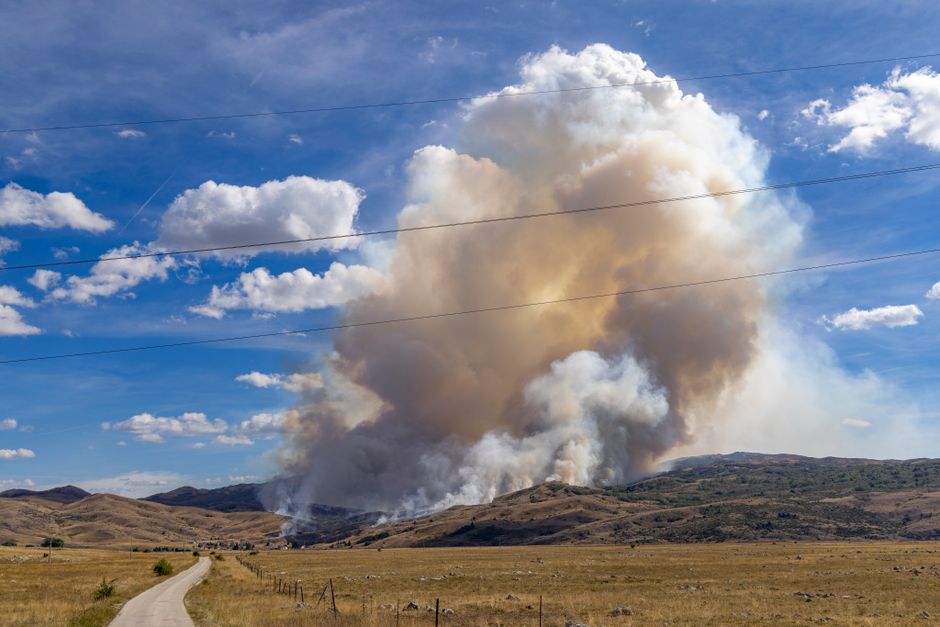
A large tan and brown smoke column billowing above dry hills at sunset

Field learning tool

Learning From Smoke

Color is only one clue. Read volume, velocity, density and color together, compare openings, and watch for change. This page teaches you how to look at smoke the way an experienced firefighter does, and where that reading stops.

VolumeVelocityDensityColor

All fire smoke is hazardous. Use your PPE where possible, protect your airways, communicate what you see, and reassess continuously.

Start here

Read the whole picture

Smoke is the fire talking to you. It shows how much fuel is being heated, how hard the fire is pushing, how dirty the burn is and where the air is taking it. Any single clue on its own will mislead you, so work through four questions every time.

Volume

How much smoke is there?

Volume tracks how much fuel is being heated and off-gassing. A lot of smoke from a small area is telling you about the fuel, not just the flames you can see.

A very large tan smoke column rising over open country
Huge volume from one fire: a lot of fuel is being heated.
Dense pale smoke covering a forested hillside
Volume filling a whole hillside, not a single tree.
Aerial view of smoke spreading across a forested valley
Aerial view: volume tells you how far the problem reaches.

Photos: sy lamyne photographie, K / Pexels

Velocity

How fast and how hard is it moving?

Fast, churning, boiling smoke shows energy being released quickly. Smoke that slows, stalls or changes direction shows the opposite, or a wind change arriving.

A dark smoke column bent sharply sideways by wind
Sheared hard: strong wind aloft, fast-moving smoke.
Boiling dark smoke rising above flames in a field
Boiling and churning over an active flame front.
Smoke leaning off a forested ridge in one direction
Leaning off the ridge: shows which way the air is moving.

Photos: Frank van Dijk, Alexandre P. Junior, K / Pexels

Density

How thick is it?

Thick, opaque smoke carries a lot of unburned material. Density is one of the best clues that rapid fire development is possible, and that visibility and air quality are getting worse.

Thick white smoke lying over autumn forest
Opaque and banked in: visibility inside this is poor.
A dense blue-gray smoke plume over a hill above a town
Dense plume with a hard edge: heavy unburned material.
Thin haze drifting through scorched trees after a fire
Thin residual haze: low density, little left to burn.

Photos: K, Engin Akyurt / Pexels

Color

What color is it, and what is changing?

Color is one clue among four. It can suggest what is burning and how efficiently, but color alone cannot identify the fuel, the temperature or the intensity.

Pale gray smoke drifting off a forested ridge
Pale and thin: often moisture or diluted smoke.
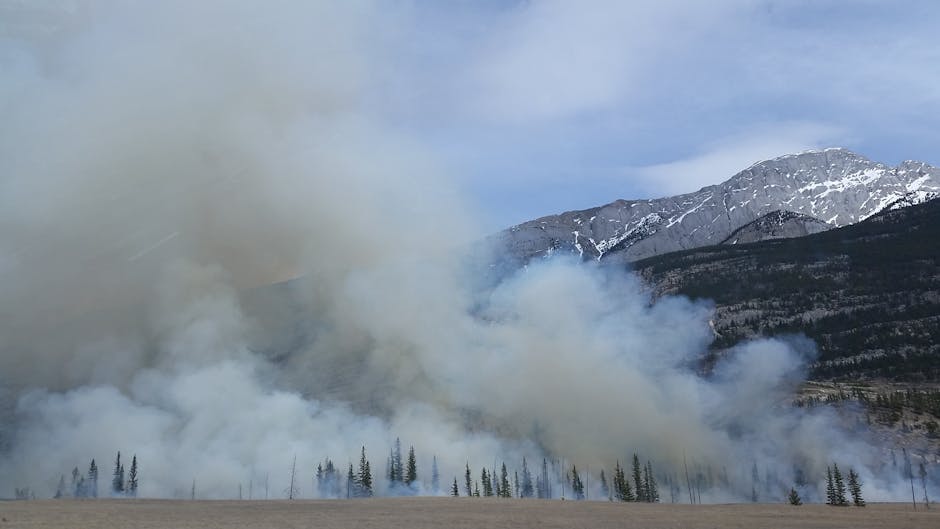
Gray smoke drifting in front of a mountain range
Gray over a mountain: distance and light change the shade.
Tan and brown smoke column above dry hills
Tan and brown: heated wood and heavy fuel.

Photos: K, Pixabay, sy lamyne photographie / Pexels

The limit of color

Color can suggest what is burning and how efficiently, but color alone cannot identify the fuel, the temperature or the intensity of the fire. Treat it as a prompt to look harder at volume, velocity and density, not as a diagnosis.

Color clues

What the colors can tell you

These are the common smoke colors firefighters see in the field, with a real photo of each and an honest note about what it does not prove. Lighting, sun angle, distance and camera settings all change how a color looks, so read the smoke, not the picture.

Dense pale smoke drifting across a forested mountainside

White

Often moisture: steam from wet or green fuel, dew, rain on hot ground, or fine fuel burning with plenty of oxygen. In wildland work, white smoke frequently means green or damp fuel and a fire that is not yet running hard.

What it does not prove: White does not mean cool or safe. Moisture flashes off fast in a hot fire, and white smoke can sit in front of a serious heat source.

Photo: K / Pexels

Thin pale smoke drifting off a forested ridge

Light gray

Diluted smoke, often from smouldering material, a small area of active burning, or smoke that has travelled and mixed with air. Thin drift smoke is a good locator when flames are hidden by terrain.

What it does not prove: A thin column can be the top of a fire burning in heavy fuel below the ridge. Check what is under it before you call it small.

Photo: K / Pexels

Dense dark gray smoke patches spreading through lighter smoke over a forested valley

Dark gray

Soot and incomplete combustion. Dense dark gray usually means heavy fuel, poor ventilation or a fire that has moved into material with more oils and resins. Watch density and movement together, and watch where the dark part of the plume is heading.

What it does not prove: Color alone cannot establish intensity. A dark column standing still in stable air is a different problem from a dark column bending hard in wind.

Photo: K / Pexels

Heavy black smoke above a line of flames in dry grass

Black

Soot rich smoke from very incomplete combustion: oils, resins, heavy fuels, structure contents, or a fire starved of oxygen. In structural work, high volume, high velocity black smoke is a flashover warning. In the bush, treat black smoke as heavy fuel loading and a serious heat source.

What it does not prove: Black smoke cannot tell you which fuel is burning or how hot it is. It tells you the burn is dirty, and that visibility and air quality are dropping fast.

Photo: Alexandre P. Junior / Pexels

Large tan and brown smoke column billowing above dry hills

Yellow or brown

Tan, brown or yellow smoke often shows heated wood and heavy fuel, and it frequently appears in big, long-burning columns. Sunlight through the plume can also tint it, especially low sun in the morning and evening.

What it does not prove: Unusual colors, such as green, blue or strong yellow, may involve chemicals or treated material. Color cannot identify the substance, so treat it as unknown and stay out of it.

Photo: sy lamyne photographie / Pexels

Shape and movement

Read the shape of the column

Wildland firefighters get more from column shape than from color. A column is a picture of stability, wind and heat at the same time. Learn these four shapes and what each one usually means.

Vertical and building

Strong convection and an unstable atmosphere. The fire is generating its own lift and the column is growing. Expect increasing fire behavior, more spotting and harder working conditions.

Leaning or sheared

Wind is pushing the column over, often changing speed or direction with height. Shear can mean wind shift, plume disruption and long-range spotting downwind.

Flattened or layered

A stable layer or inversion is capping the smoke. Fire behavior is usually reduced, but smoke stays low, drainage is poor and visibility and air quality fall.

Pulsing and boiling

The column surges and collapses in cycles. Pulsing shows convection strengthening and easing, and it can precede a break through the inversion, a wind change or plume-driven runs.

A smoke column bent sharply over by wind above flat green fields

Sheared column in the open

The base is burning hard in light fuel, the column is dark and dense, and the top is bent well over by wind. Read from the bottom up: heavy fuel consumption at the base, strong wind above, and a plume that will lay smoke and spotting downwind. That downwind side is where the next problem usually starts.

Photo: Frank van Dijk / Pexels

In the bush

What smoke tells you about the fire

Column growth is a rate-of-spread clue

A column that suddenly widens, deepens or starts to lean is often the first visible sign of an increase in fire behavior, before you feel the wind or see the flames.

A large tan smoke column widening as it rises over open country
Widening and deepening: the fire is finding more fuel.
Smoke spreading across a whole forested hillside
Volume filling a hillside is growth you can see from distance.
Boiling smoke above a flame front in dry grass
Boiling over the flames: energy releasing fast.

Photos: sy lamyne photographie, K, Alexandre P. Junior / Pexels

Smoke shows you the wind aloft

The lean and drift of the column show wind above the ground. When surface wind and column lean disagree, expect change. That gap is a classic warning before a shift.

A dark column sheared hard to one side by wind aloft
Sheared column: strong wind above the ground.
Smoke leaning off a ridge in one consistent direction
Lean shows direction; a sudden stand-up shows change.
Thin pale smoke drifting away from a ridge
Light drift: weaker wind aloft, smoke travelling far.

Photos: Frank van Dijk, K / Pexels

Smoke sitting low means an inversion

Smoke pooling in a valley, lying flat or trapped under a layer is a stable air signal. Fire behavior may ease, but smoke exposure and poor visibility get worse.

Gray smoke lying in a band in front of a mountain range
Smoke held in a layer instead of rising freely.
Thin smoke hanging low among scorched trees
Low, slow smoke: stable air, poor clearing.
Aerial view of smoke spread flat across a forested valley
Flat spread from above: smoke trapped under a lid.

Photos: Pixabay, Engin Akyurt, K / Pexels

Color hints at fuel and moisture

Pale smoke with green fuel and damp conditions, darker smoke with heavy fuel, oils and resins. Use it as a hint to check fuel and moisture, never as proof.

Thick white smoke over green and autumn forest
Pale and thick: moisture, green fuel, plenty of oxygen.
Black smoke rising above flames in dry grass
Black: soot-rich, dirty burn, heavy unburned material.
Tan and brown smoke above dry hills
Tan and brown: heated wood and heavy fuel.

Photos: K, Alexandre P. Junior, sy lamyne photographie / Pexels

Watch the change, not the snapshot

The most useful information is what changes: a white column turning black, a leaning column standing up, smoke that stops rising. Compare the same column every few minutes.

A thin pale column drifting steadily off a ridge
Thin and steady now. Note it, then look again.
A dense blue-gray plume building over a hill near a town
Building and thickening: this is the change to report.
Dark smoke patches spreading through lighter smoke
Mixed shades in one plume: something is changing.

Photos: K / Pexels

Smoke is also an aviation and crew hazard

Smoke cuts visibility for aircraft, tankers and drone work, and it carries fine particles and carbon monoxide. If you cannot see the column clearly, say so early.

Aerial view of a smoke plume obscuring part of a valley and town
From the air, the plume hides the ground and the next ridge.
Smoke and haze reducing visibility across a mountain range
Haze on the horizon: aircraft lose the far ridges first.
Smoke drifting at ground level through burnt trees
Ground-level smoke: crews breathe this and lose sight lines.

Photos: K, Pixabay, Engin Akyurt / Pexels

Practice

A three-minute field drill

Reading smoke is a habit, not a talent. Run this drill whenever you have a fire in view, including small ones, prescribed burns and campfires. It works just as well on a photo from a briefing.

  1. 1

    Stop and look at the whole column, not the flames. Note the base, the middle and the top separately.

  2. 2

    Call the four cues out loud: volume, velocity, density, color. Say what each one is doing right now.

  3. 3

    Compare openings. If you can see more than one part of the fire, check whether they agree. Different smoke from the same fire means different things are burning.

  4. 4

    Watch for change for a few minutes. A column that changes shape or color is telling you more than a still photo ever can.

  5. 5

    Write it down with the time, your location and the wind you can feel, then repeat the observation. Patterns show up in the record, not in a single look.

  6. 6

    Pass it on. Tell your crew, your supervisor and, where relevant, dispatch or aviation what you are seeing and what has changed.

Safety

Smoke is the hazard you carry home

Protect your airways

Wildland smoke carries fine particles and carbon monoxide. Wear the respiratory protection your agency issues, stay out of thick smoke where you can, and rotate crews out of heavy exposure. Structural smoke needs full PPE and SCBA, not a bandanna.

Watch visibility and aircraft

Smoke decides whether tankers, helicopters and drones can work safely. Report changing visibility, smoke height and drift early. A column that looks impressive from the ground can be a no-go for aviation.

Smoke in your eyes and lungs

Eye irritation, coughing, headaches and a tight chest are exposure signs. Move to cleaner air, tell your supervisor and get checked. Do not treat symptoms as part of the job.

Unknown smoke is unknown chemistry

Buildings, vehicles, treated timber, tyres, chemical stores and lithium batteries all produce smoke you should not breathe or stand in. Unusual smoke colors are a reason to withdraw and call for specialist advice.

Keep learning

Where to go deeper

The four-cue framework on this page follows Dave Dodson's work on reading smoke, as used in the Read the Smoke training graphic from Tri-State Fire Training. The wildland column guidance follows NWCG fire behaviour and smoke management material. Every fire is local: check your own agency's guidance.

All fire smoke is hazardous.

Use PPE where possible. Communicate conditions. Reassess continuously. The best smoke reading in the world is worthless if nobody else hears it.