Watch
Fire gear needs
What a firefighter carries, country by country
The job is the same everywhere: walk or fly into the bush, stop the fire, stay alive doing it. What sits in your pack changes with the country, the helicopter, and the climate. This is a learning tool for three of the toughest jobs in wildfire, with links to the official lists so you can go to the source.
Section 1
United States: Hotshot Crew Firefighter
A hotshot walks in heavy with everything needed to live on the fireline for days. The load splits in two: line gear stays on your body all shift, the pack holds what keeps you alive between shifts.
Line gear: on your body, every shift
- Helmet with goggles and a chin strap, plus leather firefighting gloves
- Nomex shirt and trousers, all-natural underwear and socks (nothing synthetic melts)
- Eight-inch leather lace-up boots, broken in and fully laced
- Fire shelter in its case, carried where it is easily deployable from your pack
- IRPG (Incident Response Pocket Guide) and a small notebook with pencil
- Two to four quarts (2 to 4 liters) of water in canteens or a bladder
- Headlamp with fresh batteries, spare batteries, and a small first-aid kit
- Hand tool (Pulaski or similar), kept sharp and with its edge guard
- Food for the shift: trail mix, jerky, energy bars, electrolyte drink mix
- Whistle, earplugs, sunscreen, lip balm, and any personal medications
The pack: camp and comfort
- A fireline pack (50 to 65 liters) sized to carry line gear plus a shift or two of extras
- Sleeping bag and bivy sack, tent or tarp, and a foam pad
- Spare clothing layers: warm jacket, beanie, extra socks (wool, never cotton)
- Rain gear that breathes, because you work hard in it
- Extra food for 24 to 48 hours, since resupply on a big fire is never on schedule
- Toiletries, toilet paper, and a camp towel
- Spare boot laces, small repair kit (tape, cord, buckles), and a knife or multi-tool
- Water purification tablets or filter, and a metal cup or small pot for heating water
The golden rules: cotton kills, leather and Nomex protect, and water is the heaviest thing you will never regret carrying. Your line gear is checked at the vehicle and at every assignment, because the day you forget the shelter is the day you need it.

 NWCG: what a hotshot crew isNWCG Incident Response Pocket Guide (IRPG), PMS 461Wildland Fire 101: everything carried in a fireline pack (real example)Mountain Tactical: a hotshot crew member explains the gear his crew usesUS Forest Service: hotshot crews overview
Section 2
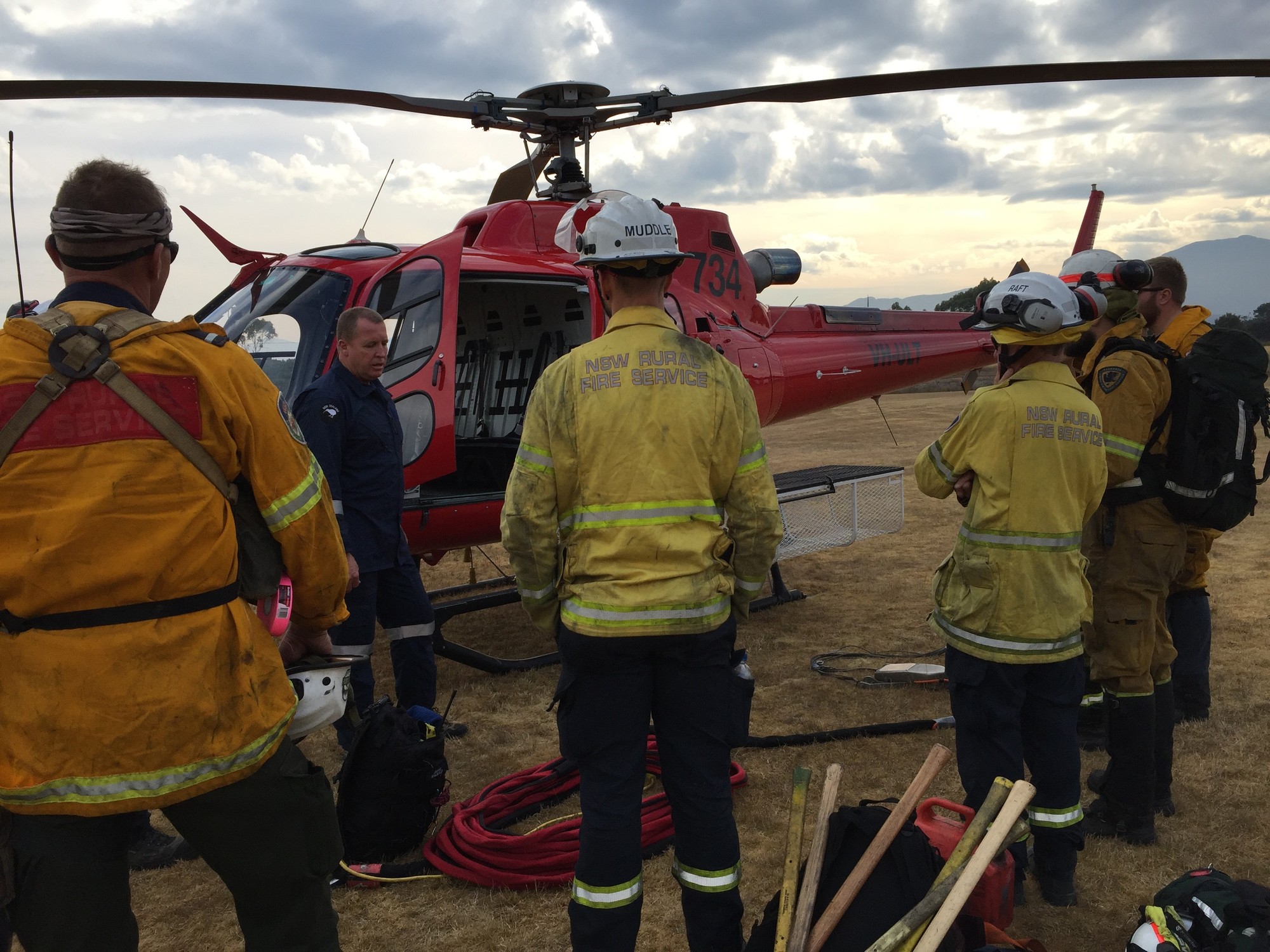
Australia: Remote Area Firefighting Team (RAFT)
RAFT firefighters are winched from helicopters into wilderness where no truck can ever go. Self-sufficiency is the whole game: what you carry is what you have, and rescue may be hours away.
The RAFT kit: everything in one day pack
- Wildland helmet with attached hearing protection muffs and goggles, leather gloves, and a face/neck shroud for ember protection
- Heat-resistant firefighting coveralls or two-piece Nomex, over natural-fiber clothing
- Sturdy lace-up boots, because much of the work is off-track in bush and rock
- A small day pack (about 20 liters) that you can winch out of a helicopter with
- Three liters or more of water in bladders or bottles, plus electrolytes and high-energy food
- GPS unit plus map and compass: remote area means no roads to navigate by
- Personal Locator Beacon (PLB) or two-way radio, carried in the day pack by one member of the group and checked before every insertion
- Headlamp, first-aid kit, fire shelter or equivalent escape plan, and whistle
- Eye protection from smoke and ash, dust mask, sunscreen, and insect repellent
- Emergency blanket and spare warm layer: nights in the wilderness get cold
How RAFT work differs
- ✓ No vehicle backup: crews are inserted by helicopter winch and work until lifted out, so fitness and pack weight are tested before the season.
- ✓ Australian bush burns fast and throws embers far: face and neck protection matters as much as the tool in your hand.
- ✓ Navigation is stressed as a survival skill: steep gullies and thick scrub mean GPS, map and compass all get used, not carried for show.
- ✓ Escape plans replace fire shelters in many agencies: know your refuge and your trigger points before the wind change arrives.
 NSW RFS Operational Procedure 1.2.17: Rapid Aerial Firefighting Teams (official PDF)NSW National Parks: responding to bushfires in national parks (RAFT work context)Helicopters and hand tools: remote area firefighting explained (Helicopter Ops magazine)
Section 3
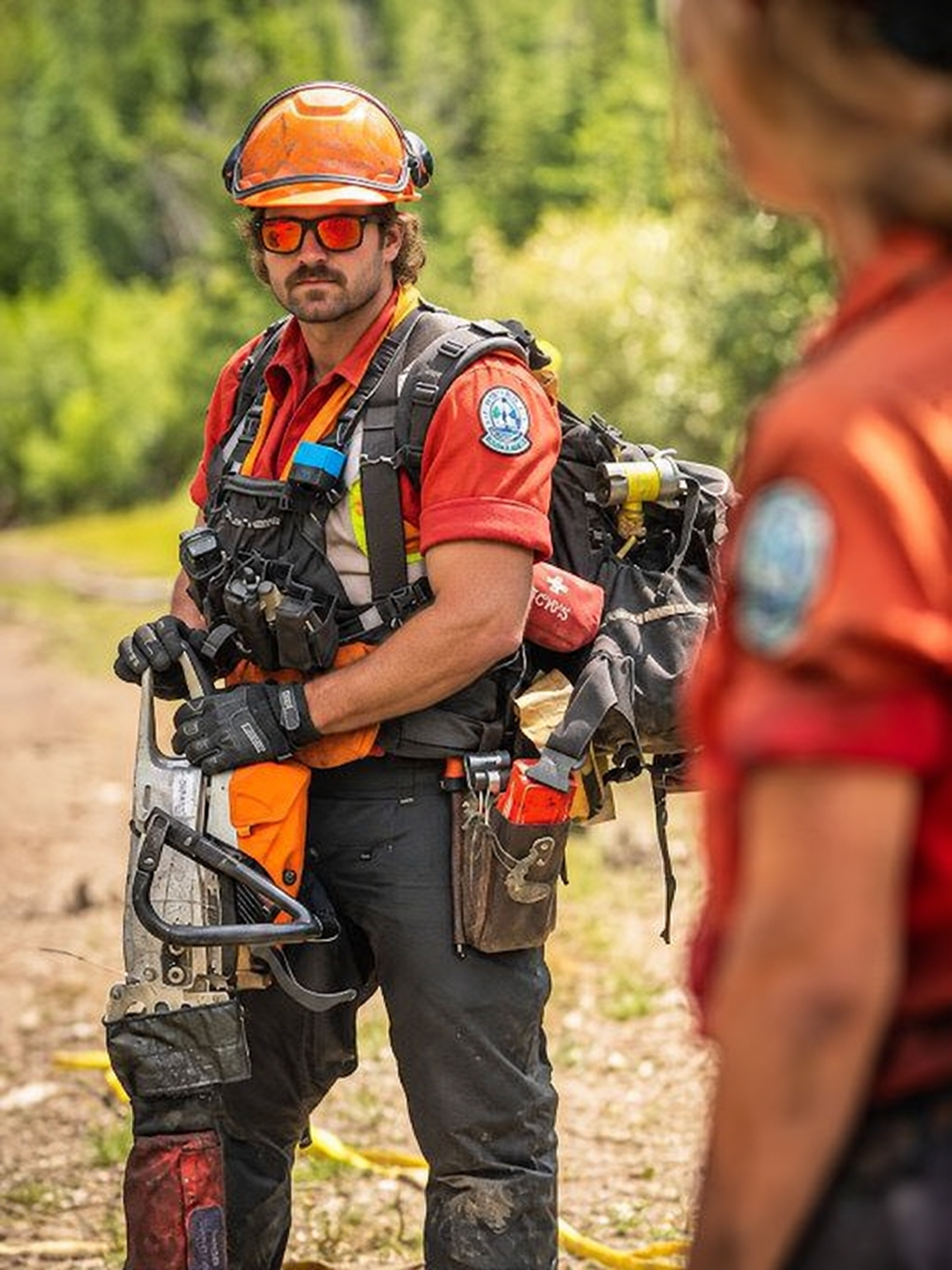
Canada: BC Wildfire Service Unit Crew Member
BCWS Unit Crews are 20-person Type 1 crews that travel to big fires across British Columbia, build line, and stay as long as the fire needs them. The kit is issued and standardized so every crew member works the same way.
The Unit Crew Member kit
- BCWS-issued flame-resistant clothing (yellow shirt and trousers) over natural-fiber clothing, plus leather boots
- BCWS hard hat with ear protection, and safety glasses or goggles
- Leather work gloves for line work and tool handling
- A BCWS line pack or day pack: line gear, water, food, first-aid kit
- Water for the working shift (2 to 4 liters) and high-energy food
- Hand tool (Pulaski or similar) with edge guard, kept sharp for sustained action
- Fire shelter in its case, headlamp, handheld radio, and map or GPS of the fire area
- Warm layer and rain shell: unit crews can be held on a fire for days
- Personal first-aid, toiletries, and survival items for spike camp living
- Spike camp kit as directed: sleeping bag, bivy or tent, and extra socks when the crew stays out overnight
How Canadian work differs
- ✓ Unit crews are sustained action: after initial attack crews jump on a new start, a unit crew arrives to build and hold line for days.
- ✓ The boreal forest and mountain terrain mean long carries over deadfall and muskeg: gear is chosen to survive abuse, not just to pass inspection.
- ✓ The kit is issued and checked as a standard, so every crew member on the line is equipped and packed the same way.
- ✓ Weather swings hard in the Canadian summer: a 30-degree afternoon can end in a cold, wet night on a spike camp far from the road.
Same rule as everywhere: the pack you can carry fast and work hard in beats the pack packed for every “what if”. Learn the official list, then make the weight count.