
 Watch
Developing your craft
The international wildfire firefighter development model
Learn the craft. Prove your skills. Protect your crew. Keep learning. Pass knowledge on.
This model is for young and developing firefighters, experienced personnel, crew leaders, trainers, and specialist responders across different countries and fire agencies. It combines practical firefighting skills, physical readiness, leadership, specialist training, technology, international safety research, and fair competency assessment into one simple system.
The central idea is simple: becoming a good firefighter is not a single course or qualification. It is a lifelong process of learning, practising, demonstrating competence, and helping others become safer and better prepared.
The model
The model at a glance
1. Prepare yourself
Fitness · Health · Resilience · Ethics · Personal responsibility
Look after yourself so you can look after your crew: fitness for your role, heat and hydration awareness, mental resilience, and the honesty to speak up when something is unsafe.
2. Learn the environment
Navigation · Fieldcraft · Weather · Terrain · Environmental hazards
Understand the country around you: navigation, campcraft and remote living, weather and fire behaviour, hazards, escape routes and working with limited support.
3. Master the basics
Fire behaviour · Handline · Mop-up · Communications · Teamwork
Dependable core skills first: handline construction, mop-up and patrol, fire behaviour, radio discipline, teamwork, and recognising when an assignment is no longer safe.
4. Develop your judgement
Situational awareness · Decision-making · Leadership · Mentoring
Experience alone does not build good judgement. Learn to think, communicate and decide under pressure, then coach newer firefighters and pass on what you know.
5. Build specialist skills
Chainsaws · Pumps · Medicine · Aviation · Incident command
Develop depth in a speciality that suits your abilities and your agency’s needs, and work only within your current competence and authorisation.
6. Use knowledge and technology
Safety research · Fire modelling · GIS · Drones · Intelligence
International safety research is a core responsibility, not an optional extra. Learn from incidents everywhere, and understand the tools and their limits.
7. Prove your competence
Fair assessment · Independent oversight · Continuous learning · Accountability
Demonstrate what you can do safely and reliably through fair, consistent assessment, protected from favouritism, disputes and politics.
The seven elements work together throughout a firefighter’s career. They are not a race, and not every firefighter needs to become a commander or specialist. Everyone needs a strong foundation, while further development depends on their role, experience, interests, and demonstrated ability. Every stage is supported by safety, teamwork, ethical conduct, and sharing knowledge with others.
Part 1
Prepare yourself
A firefighter must look after themselves so they can look after their crew. Build the fitness, strength, endurance, and mobility required for your role, and understand heat stress, hydration, fatigue, sleep, nutrition, and recovery. Develop mental resilience and self-awareness, including the ability to recognise when you are not fit for duty. Take responsibility for your actions, treat people with respect, act with honesty, know your limitations, and speak up when something is unsafe.

Part 2
Learn the environment
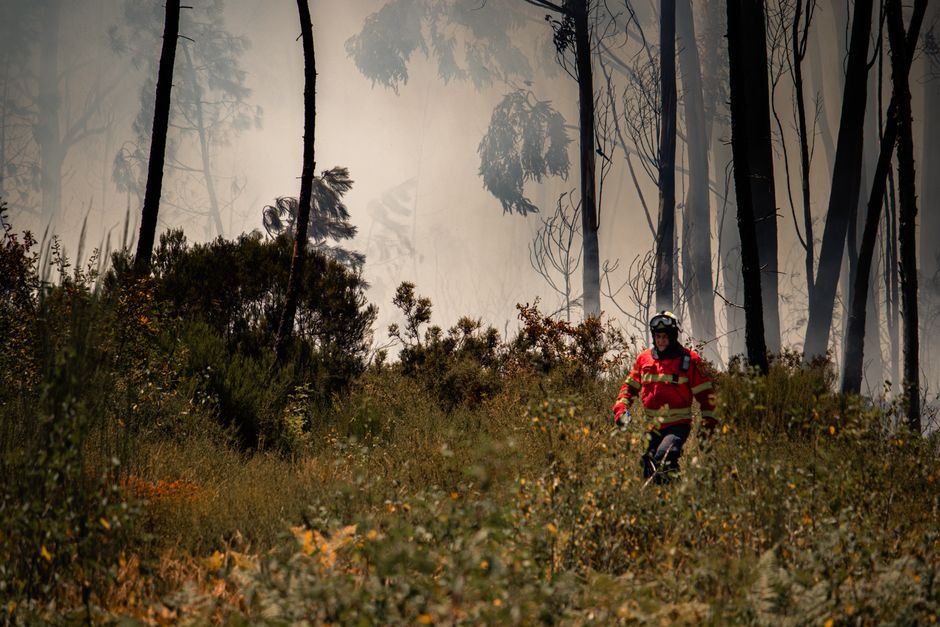
Before you can work safely in the bush, forest, grassland, or other wildfire environment, you must understand the country around you. That means navigation using maps, compass, GPS and terrain; hiking, campcraft, remote living and field logistics; weather, wind, fuels, slope and fire behaviour; environmental hazards, access, escape routes and safety zones; and working with limited communications, water, transport and medical support.
Part 3
Master the basics
Every firefighter needs dependable core skills before taking on more complex responsibilities: handline construction and tool use; mop-up, hotspot detection and patrol; fire behaviour and changing conditions; radio communications, briefings and following instructions; teamwork, accountability and operational discipline. And just as important: recognising when an assignment is no longer safe, and communicating the need to reassess.

Part 4
Develop your judgement and leadership
Experience matters, but experience alone does not guarantee good judgement. Firefighters must learn to think, communicate, and make decisions under pressure: situational awareness and anticipation; risk assessment as conditions change; empathy, respect, conflict resolution and team building; leadership fundamentals and clear communication; learning from mistakes, near misses and difficult decisions; and coaching newer firefighters and passing on practical knowledge.
Leadership begins before someone receives a leadership title.
Part 5
Build specialist skills
Firefighters can develop specialist expertise according to their abilities, interests, and operational needs. The common paths are:

Tools and machinery
Chainsaws, pumps, hose systems, heavy equipment, vehicles, and equipment maintenance.
Scouting and intelligence
Reconnaissance, terrain assessment, fire observation, mapping, and situation reporting.
Leadership and incident management
Crew leadership, emergency response coordination, planning, and incident command.
Emergency medicine
First aid, casualty recognition, evacuation coordination, and remote medical support within your qualification.
Aviation and logistics
Aviation safety, air-to-ground coordination, crew support, supplies, transport, and sustaining operations.
Part 6
Keep learning from the world
International safety knowledge is a core firefighter responsibility, not an optional extra. Wildfires cross borders, and serious injuries, fatalities, near misses and operational lessons occur in many countries. Every firefighter should read international fatality reports and lessons-learned publications, study changes in fireline safety knowledge and human factors, understand why an incident occurred and what warning signs were present, research subjects relevant to their role, discuss important findings with their crew and supervisors, apply relevant lessons through training and approved changes to practice, and share useful research with colleagues so important knowledge does not remain with one person or one agency.
Research should be evaluated critically. Consider the quality of the evidence, the circumstances of the incident, and whether the findings apply to your operating environment. Follow approved local procedures while raising evidence-based recommendations when improvements are needed.
Personal research is part of professional development
Firefighters should maintain a simple record of significant safety learning. Five questions are enough:
1. What happened?
Summarise the incident, injury, fatality, or research finding.
2. Why did it happen?
Identify relevant hazards, decisions, conditions, and contributing factors.
3. What can we learn?
Record the lessons that apply to your role and crew.
4. What should change?
Identify possible improvements to training, equipment, procedures, or decision-making.
5. Who needs to know?
Share the findings with the people who could benefit.
This does not mean every firefighter must become a scientist. It means every firefighter should be an active learner rather than relying entirely on information that someone else chooses to pass down.
Part 7
Use technology and prove your competence
Modern firefighting relies on both good information and capable people. Firefighters should understand the appropriate use and limitations of iPads, laptops, GPS, digital maps and geographic information systems; fire behaviour and fire-spread models; drones and uncrewed aircraft systems; aerial intelligence, remote sensing and reconnaissance; communications systems and information sharing; and offline tools, backup systems and procedures for technology failure.
Technology supports judgement; it does not replace it.
At the same time, all firefighters must demonstrate their competence through fair, consistent assessment. Assessment should establish what a person can do safely and reliably, not reward personal relationships, punish people for being unpopular or be used to demonstrate personal power.
Progression
How do firefighters progress?
Firefighters develop at different rates. Progress should depend on demonstrated ability, relevant experience, and the requirements of the role, not simply age, time served, or personal connections.
Step 1
Learn
Build foundational knowledge, practise basic skills, and learn from experienced firefighters.
Step 2
Demonstrate
Show that you can perform required tasks safely and consistently under appropriate supervision.
Step 3
Develop
Build judgement, gain experience, improve teamwork, and pursue advanced or specialist skills.
Step 4
Lead or specialise
Take on additional responsibilities when qualified, authorised, and assessed as competent.
Step 5
Teach and pass it on
Mentor others, share international safety lessons, and help develop the next generation of firefighters.
Fairness
How do we keep competency assessment fair?
The model must protect firefighters from favouritism, personal disputes, retaliation, and political interference. Every participating agency should implement these minimum safeguards:
Clear standards
Everyone knows what competence looks like before assessment begins.
Qualified assessors
Assessors have the appropriate technical and assessment expertise.
Independent oversight
Conflicts of interest are declared, and disputed or high-consequence decisions can be independently reviewed.
Recorded evidence
Decisions are supported by documented observations and published criteria.
A right to appeal
Firefighters can challenge unfair or inconsistent assessments without being penalised for raising a genuine concern.
Accountability
Assessment patterns are audited, interference is investigated through fair procedures, and proven abuse is disciplined.
Assessors must not pass an incompetent firefighter to please a manager, nor fail a competent firefighter because of personal or organisational politics.
International
Making the model work internationally
The model should establish a shared professional foundation while allowing each country and agency to retain its own legal requirements, terminology, qualifications, equipment standards, and operating procedures.
What stays consistent worldwide
- • Ethical conduct and professional responsibility
- • Core firefighting and fieldcraft principles
- • Fair, evidence-based competency assessment
- • International safety research and lessons learned
- • Continuous learning and knowledge sharing
- • Respect, teamwork, and accountability
What can vary locally
- • National laws and agency policies
- • Vegetation, fuels, terrain, and climate
- • Qualification names and accreditation systems
- • Equipment, tactics, and operational doctrine
- • Training delivery and local resource availability
- • Agency ranks and command structures
International cooperation should include exchanging research, translating important safety findings where needed, comparing training practices, and learning from incidents outside one’s own country. An international model should never assume that one country’s procedures are automatically suitable everywhere. It should encourage firefighters to understand the underlying safety principles and apply them within their own authorised systems.
The final principle
Develop yourself, protect your crew, improve the profession
Developing Your Craft should be more than a training framework. It should establish a professional culture in which firefighters are encouraged to learn, ask questions, challenge unsafe assumptions, and share knowledge without fear of unfair treatment. Its core commitments are:
- 1. Prepare yourself — maintain your physical readiness, wellbeing, and professional integrity.
- 2. Learn your craft — build sound fieldcraft and technical skills.
- 3. Use your judgement — recognise hazards, understand uncertainty, and communicate when conditions change.
- 4. Develop others — contribute to a capable, respectful, and accountable crew.
- 5. Learn internationally — actively research injuries, fatalities, emerging hazards, and lessons from other fire services.
- 6. Demand fair assessment — ensure competence is assessed consistently, independently, and transparently.
- 7. Pass knowledge on — make sure the next generation benefits from what previous firefighters have learned.
A good firefighter learns the job. A great firefighter understands the risks. A professional firefighter never stops learning — and makes sure others learn too.
Others someday may be depending on your decisions on who lives and who dies.